
STEP 1 — TELL US YOUR GOALS
What Do You Want To Work On?
Tap one or more boxes below that match what you want to improve — then scroll down and tap Run Analysis.
⚠ FOR LEARNING ONLY — THIS IS A SUGGESTION TOOL, NOT MEDICAL ADVICE. A suggestion is just a starting point for your own research — not a recommendation to follow blindly. This tool gives general examples based on research, not a prescription. Always do your own independent research, talk to a licensed doctor before starting anything, and double-check your math with the Reconstitution Calculator.
Work with your doctor — even if they disagree with you — and independently verify everything in every part of this tool (or any website) before acting on it.
Work with your doctor — even if they disagree with you — and independently verify everything in every part of this tool (or any website) before acting on it.
🩸 Suggested Blood Work BEFORE Starting Any Protocol
Inform your doctor. Protect your health. You are the most important member of your healthcare team — be honest and detailed about everything you're taking or planning to take. Sharing the full picture helps your doctor catch issues early and build a plan that fits your needs.
📋 Comprehensive Metabolic & Hormone Panel: Comprehensive Metabolic Panel (CMP) · Complete Blood Count (CBC) · Lipid Panel (Total Cholesterol, LDL, HDL, Triglycerides, VLDL) · hs-CRP · ESR · TSH · Free T4 · Estradiol (Sensitive) · Total Testosterone · Free Testosterone · SHBG · LH · FSH · Prolactin · DHEA-S · Cortisol (AM) · Vitamin D (25-OH) · Vitamin B12 · Folate · Iron Panel · Ferritin · Magnesium · Zinc · Liver Enzymes (ALT, AST, GGT) · Kidney Function (BUN, Creatinine)
🦋 Ask Your Doctor to Add — Thyroid Panel: Thyroid issues (hypo/hyperthyroidism) can mimic or worsen symptoms people often blame on peptides — fatigue, weight changes, mood, heart rate. If not already included, ask for: TSH, Free T3, Free T4, and Thyroid Antibodies (TPO/TgAb) if there's a family history of thyroid disease.
🍬 Ask Your Doctor to Add — Insulin Resistance Panel: Insulin resistance can drive fat gain, cravings, and energy crashes — and is often missed on a standard panel since fasting glucose alone can look "normal." If not already included, ask for: Fasting Insulin, Fasting Glucose, HbA1c (3-month average blood sugar), and HOMA-IR (calculated from fasting glucose + insulin).
🔥 Ask Your Doctor to Add — Inflammation Panel: Chronic inflammation can affect recovery, gut health, joints, and how well your body responds to peptides. If not already included, ask for: hs-CRP (high-sensitivity C-Reactive Protein), ESR (Erythrocyte Sedimentation Rate), and Homocysteine.
🟢 Ask Your Doctor to Add — Liver Panel: Many peptides (and underlying issues like fatty liver) are processed through the liver, so a baseline liver panel helps your doctor catch problems early and track changes over time. If not already included, ask for: ALT, AST, ALP (Alkaline Phosphatase), GGT, Total & Direct Bilirubin, Albumin, and Total Protein.
Even if your doctor disagrees, talk to them anyway. They may catch risks, suggest safer alternatives, or adjust their perspective as new research emerges. Always be honest with your doctor — if they refuse to help or listen, find another. You deserve a doctor who supports you.
Your health. Your responsibility. You decide.
🇺🇸 Thank you to all service men & women — God bless you all.
📋 Comprehensive Metabolic & Hormone Panel: Comprehensive Metabolic Panel (CMP) · Complete Blood Count (CBC) · Lipid Panel (Total Cholesterol, LDL, HDL, Triglycerides, VLDL) · hs-CRP · ESR · TSH · Free T4 · Estradiol (Sensitive) · Total Testosterone · Free Testosterone · SHBG · LH · FSH · Prolactin · DHEA-S · Cortisol (AM) · Vitamin D (25-OH) · Vitamin B12 · Folate · Iron Panel · Ferritin · Magnesium · Zinc · Liver Enzymes (ALT, AST, GGT) · Kidney Function (BUN, Creatinine)
🦋 Ask Your Doctor to Add — Thyroid Panel: Thyroid issues (hypo/hyperthyroidism) can mimic or worsen symptoms people often blame on peptides — fatigue, weight changes, mood, heart rate. If not already included, ask for: TSH, Free T3, Free T4, and Thyroid Antibodies (TPO/TgAb) if there's a family history of thyroid disease.
🍬 Ask Your Doctor to Add — Insulin Resistance Panel: Insulin resistance can drive fat gain, cravings, and energy crashes — and is often missed on a standard panel since fasting glucose alone can look "normal." If not already included, ask for: Fasting Insulin, Fasting Glucose, HbA1c (3-month average blood sugar), and HOMA-IR (calculated from fasting glucose + insulin).
🔥 Ask Your Doctor to Add — Inflammation Panel: Chronic inflammation can affect recovery, gut health, joints, and how well your body responds to peptides. If not already included, ask for: hs-CRP (high-sensitivity C-Reactive Protein), ESR (Erythrocyte Sedimentation Rate), and Homocysteine.
🟢 Ask Your Doctor to Add — Liver Panel: Many peptides (and underlying issues like fatty liver) are processed through the liver, so a baseline liver panel helps your doctor catch problems early and track changes over time. If not already included, ask for: ALT, AST, ALP (Alkaline Phosphatase), GGT, Total & Direct Bilirubin, Albumin, and Total Protein.
Even if your doctor disagrees, talk to them anyway. They may catch risks, suggest safer alternatives, or adjust their perspective as new research emerges. Always be honest with your doctor — if they refuse to help or listen, find another. You deserve a doctor who supports you.
Your health. Your responsibility. You decide.
🇺🇸 Thank you to all service men & women — God bless you all.
🔍 OR SEARCH FOR A SPECIFIC PEPTIDE BY NAME
♂ Male
♀ Female
Fat Loss
Muscle Growth
Anti-Aging
Recovery
Sleep
Gut Health
Joints
Skin & Hair
Cognitive
Libido / Hormones
Insulin Resistance
Thyroid Support
Inflammation
Hair
Energy
Immune Support
Longevity / Bioregulators
PCOS
Autoimmune / RA
Cancer Support
💊 Vitamins, Supplements & Peptides by Condition — with Studies & Dosages
Research-backed supplements AND peptides organized by condition, with verified dosages and study references. ⚠ NOT medical advice — always discuss with your doctor before starting anything.
🌸 PCOS — Vitamins, Supplements & Peptides
💊 SUPPLEMENTS & VITAMINS
Myo-Inositol + D-Chiro Inositol (40:1) — 4g Myo + 400mg D-Chiro daily · restores ovarian function, reduces androgens, improves insulin signaling. 📖 Unfer et al. 2012, Gynecol Endocrinol · Lagana et al. 2019, PMID 31541575
NAC (N-Acetyl Cysteine) — 600mg 3x/day · reduces androgens, improves ovulation rate; shown comparable to Clomiphene in some ovulation-induction trials. 📖 Cheraghi et al. 2020, PMID 32879680 · Nasr 2010, PMID 20035899
Vitamin D3 + K2 — 5,000 IU D3 + 100mcg K2 MK-7 daily · >80% of PCOS women are D-deficient; correcting it improves insulin sensitivity and menstrual regularity. 📖 Wehr et al. 2011, PMID 21934790
Magnesium Glycinate — 300–400mg before bed · reduces cortisol and insulin resistance; hypomagnesemia is more prevalent in PCOS. 📖 Khashchenko et al. 2020, PMID 33088174
Zinc — 30–50mg elemental/day · lowers free androgens (DHT), supports ovulation, reduces hirsutism and acne. 📖 Jamilian et al. 2016, PMID 27164437
Berberine — 500mg 3x/day with meals · activates AMPK (same as Metformin); multiple RCTs show equivalent A1c and insulin reduction in PCOS. 📖 An et al. 2014, PMID 25060831 · Wei et al. 2012, PMID 23134069
Spearmint (Extract or Tea) — 500mg extract or 2 cups tea/day · significant reduction in free testosterone via anti-androgenic activity in RCT. 📖 Grant 2010, PMID 19585478
Omega-3 (EPA + DHA) — 2–4g/day · reduces triglycerides, lowers androgens, reduces liver fat, improves egg quality. 📖 Khani et al. 2017, PMID 28582566
CoQ10 (Ubiquinol) — 200–600mg/day · improves oocyte mitochondrial function and egg quality. 📖 Xu et al. 2018, PMID 30373726
🧬 PEPTIDES FOR PCOS
MOTS-c — 5–10mg 2–3x/week SubQ · activates AMPK in skeletal muscle and liver, directly improving the insulin resistance central to PCOS. 📖 Lee et al. 2015 Cell Metabolism, PMID 25738459
Kisspeptin-10 — 100mcg 2x/week SubQ · regulates GnRH → LH/FSH pulsatility, which is dysregulated in PCOS; clinical trials demonstrate restoration of LH pulsatility. 📖 Skorupskaite et al. 2014, PMID 25368098 · Jayasena et al. 2014, PMID 24463910
BPC-157 — 250–500mcg/day SubQ · reduces systemic inflammation and supports the gut-hormone axis; PCOS involves chronic low-grade inflammation and gut dysbiosis. 📖 Sikiric et al. 2018, PMID 30197782
KPV — 250–500mcg/day SubQ · tripeptide that reduces NF-κB-driven inflammation worsening androgen excess and insulin resistance. 📖 Dalmasso et al. 2008, PMID 18510698
Selank — 250–500mcg/day SubQ or intranasal · reduces cortisol and HPA axis dysregulation, both of which amplify PCOS symptoms. 📖 Semenova et al. 2010, PMID 20803000
SS-31 (Elamipretide) — 1–2mg/day SubQ · improves mitochondrial efficiency and insulin-mediated glucose uptake at the cellular level. 📖 Bhatt et al. 2020, PMID 32217594
🍬 Insulin Resistance — Vitamins, Supplements & Peptides
💊 SUPPLEMENTS & VITAMINS
Berberine — 500mg 3x/day with meals (1,500mg total) · activates AMPK, inhibits hepatic glucose production; meta-analyses show A1c reduction of 0.5–1.0%. 📖 Yin et al. 2008, PMID 18397984 · Liang et al. 2019 meta-analysis, PMID 31035507
Magnesium Glycinate — 300–400mg/day · cofactor in 300+ insulin-pathway enzymes; RCTs show fasting glucose reduction. 📖 Mooren et al. 2011, PMID 21199787
Alpha-Lipoic Acid (ALA) — 600–1,200mg/day · improves glucose uptake via GLUT4 translocation; used clinically for diabetic neuropathy. 📖 Golbidi et al. 2011, PMID 22123271
Chromium Picolinate — 200–400mcg/day · potentiates insulin receptor tyrosine kinase; RCTs show fasting glucose and HbA1c reductions. 📖 Anderson 1998, PMID 9614170
Vitamin D3 + K2 — 5,000 IU D3 + 100mcg K2 daily · VDR receptors on pancreatic beta cells regulate insulin secretion; D deficiency independently predicts IR. 📖 Nazarian et al. 2011, PMID 21951289
Zinc — 25–30mg elemental/day · required for insulin synthesis, secretion, and crystallization in beta cells. 📖 Jayawardena et al. 2012, PMID 22515411
Ceylon Cinnamon Extract — 1–3g/day · inhibits intestinal glucosidases, improves insulin receptor signaling. Use Ceylon NOT Cassia (coumarin risk). 📖 Khan et al. 2003, PMID 14633804
Omega-3 (EPA + DHA) — 2–4g/day · reduces IRS-1 serine phosphorylation (a key driver of IR), lowers hepatic fat. 📖 Gao et al. 2009, PMID 19561160
CoQ10 (Ubiquinol) — 200–400mg/day · mitochondrial dysfunction is a root cause of IR; CoQ10 improves glucose oxidation. 📖 Mezawa et al. 2012, PMID 22142941
Myo-Inositol + D-Chiro (40:1) — 2g Myo + 200mg D-Chiro daily · inositol serves as a second messenger in insulin signaling; deficiency impairs glucose uptake. 📖 Croze & Soulage 2013, PMID 23764429
🧬 PEPTIDES FOR INSULIN RESISTANCE
MOTS-c — 5–10mg 2–3x/week SubQ · directly activates AMPK in skeletal muscle and liver; demonstrated reversal of high-fat-diet-induced insulin resistance. 📖 Lee et al. 2015 Cell Metabolism, PMID 25738459 · Reynolds et al. 2021, PMID 33753722
SS-31 (Elamipretide) — 1–2mg/day SubQ · improves mitochondrial cristae and electron chain efficiency; IR is fundamentally a mitochondrial disease. 📖 Anderson et al. 2009, PMID 19265020
Semaglutide / Retatrutide / Tirzepatide · gold-standard pharmacological approach; dramatically improves insulin sensitivity, reduces glucagon, lowers fasting glucose. Titrate per standard GLP-1 protocols. 📖 Wilding et al. 2021 NEJM · Jastreboff et al. 2022 NEJM (tirz) · Jastreboff et al. 2023 NEJM (reta)
AOD-9604 — 300–500mcg/day SubQ, fasted · HGH fragment with NO glucose disruption (unlike full HGH); pure lipolysis without worsening IR. 📖 Heffernan et al. 2001, PMID 11522877
BPC-157 — 250–500mcg/day SubQ · reduces cortisol-driven glucose dysregulation and GI inflammation which worsens IR. 📖 Sikiric et al. 2016, PMID 27546276
🔥 Fat Loss — Vitamins, Supplements & Peptides
💊 SUPPLEMENTS & VITAMINS
L-Carnitine — 1–3g/day · shuttles long-chain fatty acids into mitochondria for beta-oxidation; improves fat utilization during cardio. 📖 Pooyandjoo et al. 2016, PMID 26948242
Green Tea Extract (EGCG) — 400–800mg/day · inhibits COMT, prolonging norepinephrine; shown to increase 24hr EE by 3–4% and fat oxidation by 17%. 📖 Dulloo et al. 1999, PMID 10584049
Vitamin D3 + K2 — 5,000 IU D3 + 100mcg K2 daily · D-deficiency upregulates PTH which triggers fat storage. 📖 Shafinaz & Majid 2015
Electrolytes (Na/K/Mg) — daily — non-negotiable on GLP-1 protocols. Target: 2,000–3,000mg Na, 3,500mg K, 400mg Mg/day.
CoQ10 (Ubiquinol) — 200mg/day · mitochondrial support; maximizes energy from fat oxidation. 📖 Raygan et al. 2016, PMID 27450189
5-HTP — 100–200mg before bed · reduces carbohydrate cravings and appetite on GLP-1 protocols. 📖 Cangiano et al. 1992, PMID 1384305
🧬 PEPTIDES FOR FAT LOSS
Retatrutide — 2–12mg once/week SubQ (titrate slowly) · triple agonist (GLP-1/GIP/Glucagon); 24.2% weight loss at 48 weeks in Phase 2. 📖 Jastreboff et al. 2023 NEJM, PMID 37351564
Tirzepatide — 2.5–15mg once/week SubQ · dual GLP-1/GIP; 22.5% average body weight loss at 72 weeks in SURMOUNT-1. 📖 Jastreboff et al. 2022 NEJM, PMID 35658024
Semaglutide — 0.25–2.4mg once/week SubQ · GLP-1 agonist; 14.9% average body weight loss in STEP-1 trial. 📖 Wilding et al. 2021 NEJM, PMID 33567185
AOD-9604 — 300–500mcg/day SubQ, fasted · pure lipolysis from HGH C-terminal fragment; no IGF-1 activation, no glucose disruption. 📖 Heffernan et al. 2001, PMID 11522877
Tesamorelin — 1–2mg/day SubQ · FDA-approved GHRH analog for visceral fat reduction; reduces visceral adipose by 15–20%. 📖 Falutz et al. 2010, PMID 20173752
MOTS-c — 5–10mg 2–3x/week SubQ · improves fat metabolism and exercise efficiency via AMPK. 📖 Lee et al. 2015, PMID 25738459
5-Amino-1MQ — 50mg/day oral · NNMT inhibitor; reduces fat mass while preserving lean mass by upregulating NAD+ metabolism. 📖 Neelakantan et al. 2019, PMID 31241378
💪 Muscle & Recovery — Vitamins, Supplements & Peptides
💊 SUPPLEMENTS & VITAMINS
Creatine Monohydrate — 5g/day · most-researched supplement; increases phosphocreatine stores, improves strength by 5–15%, accelerates recovery. 📖 Lanhers et al. 2017 meta-analysis, PMID 27328852
Magnesium Glycinate — 400mg/day · reduces DOMS, improves sleep depth, prevents neuromuscular cramping. 📖 Setaro et al. 2014, PMID 23675073
Zinc — 25–30mg/day · required for testosterone synthesis, protein metabolism, immune recovery post-training. 📖 Prasad et al. 1996, PMID 8875519
Vitamin D3 + K2 — 5,000 IU D3 + 100mcg K2 daily · D3 upregulates IGF-1 and muscle protein synthesis. 📖 Close et al. 2013, PMID 23860653
Omega-3 (EPA + DHA) — 3–4g/day · activates mTOR, reduces DOMS, shown to increase muscle protein synthesis by 50% in older adults. 📖 Smith et al. 2011, PMID 21159787
HMB (Beta-Hydroxy-Beta-Methylbutyrate) — 3g/day · leucine metabolite; reduces muscle protein breakdown, improves net protein balance. 📖 Wilson et al. 2014, PMID 25028999
🧬 PEPTIDES FOR MUSCLE & RECOVERY
BPC-157 — 250–500mcg/day SubQ · accelerates tendon-to-bone healing, reduces inflammation, upregulates GH receptors. 📖 Chang et al. 1997, PMID 9234028 · Sikiric et al. 2018, PMID 30197782
TB-500 (Thymosin Beta-4) — 2–2.5mg 2x/week SubQ x4–6 wks, then 2mg monthly · promotes actin cell motility, angiogenesis, and tissue remodeling. 📖 Goldstein & Kleinman 2015, PMID 25754600
CJC-1295 No-DAC + Ipamorelin — 200–300mcg each at bedtime 5x/week · pulsatile GH release during deep sleep for recovery and body recomposition. 📖 Teichman et al. 2006 PMID 16945971 · Raun et al. 1998 PMID 9849822
GHK-Cu — 1–2mg/day SubQ · stimulates collagen and elastin synthesis, promotes nerve regeneration, upregulates anti-inflammatory genes. 📖 Pickart et al. 2018, PMID 30469512
🧬 Anti-Aging & Longevity — Vitamins, Supplements & Peptides
💊 SUPPLEMENTS & VITAMINS
NMN (Nicotinamide Mononucleotide) — 500mg–1g/day morning · NAD+ declines 50% from age 20→50; restores sirtuin activity, DNA repair, and mitochondrial function. 📖 Yoshino et al. 2021 Science, PMID 34582786 · Mills et al. 2016 Cell Metabolism, PMID 27411018
CoQ10 (Ubiquinol form) — 200–400mg/day with fat · critical for mitochondrial ATP production and antioxidant defense; declines with age and statin use. 📖 Mantle et al. 2018, PMID 29397563
Resveratrol — 500mg/day with fat · SIRT1 activator; synergistic with NMN for NAD+ pathway activation. 📖 Lagouge et al. 2006 Cell, PMID 17112576
Magnesium L-Threonate — 2g/day · only form shown to cross the blood-brain barrier; improves synaptic density and cognitive aging. 📖 Liu et al. 2016, PMID 27021134
Vitamin D3 + K2 — 5,000 IU D3 + 100mcg K2 MK-7 · D3 activates 200+ longevity-related genes; K2 prevents arterial calcification. 📖 Schurgers et al. 2007, PMID 17002740
Omega-3 (EPA + DHA) — 2–4g/day · reduces telomere shortening rate; lowers IL-6 and TNF-α. 📖 Farzaneh-Far et al. 2010 JAMA, PMID 20085953
🧬 PEPTIDES FOR ANTI-AGING
Epithalon — 10mg/day SubQ x10–20 days, 1–2x/year · induces telomerase, elongates telomeres, restores pineal melatonin secretion. 📖 Khavinson et al. 2003, PMID 14523360 · Anisimov et al. 2003, PMID 14533127
GHK-Cu — 1–2mg/day SubQ · resets gene expression toward a younger state; downregulates 30+ inflammation genes, upregulates repair genes. 📖 Pickart & Margolina 2018, PMID 30469512
NAD+ (SubQ) — 50–500mg SubQ 3–5x/week · direct NAD+ repletion; bypasses conversion step vs NMN/NR. 📖 Rajman et al. 2018 Cell Metabolism, PMID 29514063
MOTS-c — 5–10mg 2–3x/week SubQ · restores mitochondrial homeostasis; shown to increase lifespan in mouse models. 📖 Lee et al. 2015, PMID 25738459
Thymalin — 5–10mg SubQ x10 days, 2x/year · thymic bioregulator; shown in 35-year Russian longevity study to reduce mortality by 2.5×. 📖 Khavinson & Morozov 2003, PMID 14523378
Thymosin Alpha-1 — 1.6mg 2x/week SubQ · boosts T-cell maturation and dendritic cell function; FDA-approved in some countries. 📖 Garaci et al. 2012, PMID 22325148
🧠 Cognitive & Focus — Vitamins, Supplements & Peptides
💊 SUPPLEMENTS & VITAMINS
Lion's Mane (fruiting body) — 1–3g/day · stimulates NGF and BDNF production; RCT showed improved cognitive scores over 16 weeks. 📖 Mori et al. 2009, PMID 18844328
Omega-3 DHA — 1–2g DHA/day · DHA is ~40% of brain PUFAs; low DHA is independently associated with cognitive decline. 📖 Denis et al. 2013, PMID 23232018
Magnesium L-Threonate — 2g/day · improves working memory and long-term memory consolidation by increasing hippocampal synaptic density. 📖 Liu et al. 2016, PMID 27021134
Bacopa Monnieri (50% bacosides) — 300–600mg/day · improves information retention and processing speed; effects take 8–12 weeks. 📖 Stough et al. 2001, PMID 11498727
B-Complex + Methylfolate + B12 — daily · homocysteine reduction, myelin synthesis, neurotransmitter production. 📖 Kennedy 2016, PMID 28176720
L-Theanine + Caffeine (2:1) — 200mg theanine + 100mg caffeine · alpha-wave generator; improves sustained attention and reduces jitteriness. 📖 Owen et al. 2008, PMID 18681988
🧬 PEPTIDES FOR COGNITIVE FUNCTION
Semax — 300–600mcg/day intranasal (or 200–500mcg SubQ) · ACTH analog; upregulates BDNF, improves focus and memory encoding within days. 📖 Dolotov et al. 2006, PMID 16765471
Selank — 250–500mcg/day intranasal · anxiolytic nootropic; modulates GABA-A and serotonin without sedation. 📖 Semenova et al. 2010, PMID 20803000
Dihexa (PNB-0408) — 10–30mg oral or topical · potent BDNF-mimetic; estimated 7 orders of magnitude more potent than BDNF. Start very low. 📖 McCoy et al. 2013, PMID 23462217
NAD+ / NMN — SubQ or oral · cerebral NAD+ depletion is a hallmark of neurodegeneration; repletion restores neuronal energy and DNA repair. 📖 Hou et al. 2021, PMID 33499922
Pinealon — 1–2mg/day SubQ x10 days · brain bioregulator; restores sleep-wake cycles which directly impact memory consolidation. 📖 Khavinson 2002 (Bioregulatory peptides series)
😴 Sleep — Vitamins, Supplements & Peptides
💊 SUPPLEMENTS & VITAMINS
Magnesium Glycinate — 400mg 30–60 min before bed · calms NMDA receptors, reduces cortisol, activates parasympathetic nervous system. 📖 Abbasi et al. 2012, PMID 23853635
L-Theanine — 200–400mg before bed · increases alpha brain waves, reduces excitatory glutamate; no grogginess. 📖 Nobre et al. 2008, PMID 18296328
Ashwagandha (KSM-66) — 300–600mg at night · lowers cortisol by 28% in RCTs; improves sleep quality and morning alertness. 📖 Langade et al. 2019, PMID 31728244
Melatonin — 0.5–1mg (LOW DOSE) 30 min before bed · ⚠ physiological dose is 0.1–0.3mg; doses above 1mg cause grogginess and receptor desensitization. DO NOT take 5–10mg. 📖 Brzezinski et al. 2005, PMID 15649737
Glycine — 3g before bed · lowers core body temperature (required for sleep onset), improves sleep depth in RCTs. 📖 Bannai et al. 2012, PMID 22293292
Apigenin — 50mg before bed · chamomile-derived; binds GABA-A for mild sedation without tolerance. 📖 Viola et al. 1995, PMID 7491282
🧬 PEPTIDES FOR SLEEP
CJC-1295 No-DAC + Ipamorelin — 200–300mcg each at bedtime 5x/week · amplifies the natural nocturnal GH pulse critical for recovery. 📖 Teichman et al. 2006, PMID 16945971
DSIP (Delta Sleep-Inducing Peptide) — 100–300mcg SubQ 30–60 min before bed · promotes delta-wave (deep) sleep; normalizes cortisol patterns. 📖 Khvatova et al. 2003, PMID 14638183
Epithalon — 5–10mg/day SubQ x10 days · restores pineal melatonin production that declines with age; normalizes circadian rhythm at the source. 📖 Khavinson & Morozov 2003, PMID 14523378
Selank — 250–500mcg intranasal before bed · reduces evening anxiety and racing thoughts without sedation hangover. 📖 Semenova et al. 2010, PMID 20803000
🌀 Gut Health — Vitamins, Supplements & Peptides
💊 SUPPLEMENTS & VITAMINS
L-Glutamine — 5–10g/day split doses · primary fuel for enterocytes; repairs leaky gut and maintains villous architecture. 📖 Kim & Kim 2017, PMID 28990538
Probiotics (multi-strain) — 10–50 billion CFU/day · restores microbiome diversity; reduces SIBO relapse, improves IBS. 📖 Ford et al. 2014 meta-analysis, PMID 24853034
Zinc Carnosine (PepZin GI) — 75mg 2x/day on empty stomach · specifically repairs gastric/intestinal mucosa; reduces zonulin (leaky gut marker). 📖 Mahmood et al. 2007, PMID 17435416
Collagen Peptides — 10–20g/day · provides glycine and proline for intestinal collagen matrix. 📖 Chen et al. 2017, PMID 29439148
Butyrate (Sodium/Calcium) — 300–600mg/day · primary colonocyte fuel; activates Treg cells, reduces intestinal inflammation. 📖 Canani et al. 2011, PMID 21224837
DGL (Deglycyrrhizinated Licorice) — 400–800mg before meals · promotes mucin secretion and prostaglandin synthesis in gastric mucosa. 📖 Dehpour et al. 1994, PMID 7978533
🧬 PEPTIDES FOR GUT HEALTH
BPC-157 — 250–500mcg/day SubQ (or oral for gut-specific) · most-studied gut-healing peptide; repairs ulcers, IBS, IBD, fistulas. 📖 Sikiric et al. 2016, PMID 27546276 · Klicek et al. 2013, PMID 23475785
KPV — 250–500mcg/day SubQ or oral · directly inhibits NF-κB in intestinal epithelial cells; clinically relevant for IBD and colitis. 📖 Dalmasso et al. 2008, PMID 18510698
Larazotide Acetate — 0.5–1mg/day oral · tight junction regulator (zonulin antagonist); seals leaky gut at the molecular level; Phase 2/3 trials for celiac and long-COVID. 📖 Leffler et al. 2015, PMID 25671487 · Murray et al. 2011, PMID 21224033
VIP (Vasoactive Intestinal Peptide) — 50–100mcg SubQ 2–3x/week · reduces gut inflammation, promotes mucosal healing, regulates intestinal motility. 📖 Lodolce et al. 2000, PMID 10837484
🦴 Autoimmune & Rheumatic Disease (RA · Lupus · Psoriasis · IBD · Polymyalgia · Sjögren's) — Vitamins, Supplements & Peptides
💊 SUPPLEMENTS & VITAMINS
Omega-3 (EPA + DHA) — 3–4g/day · suppresses leukotriene B4 and PGE2; multiple RCTs show reduction in morning stiffness and joint pain in RA. 📖 Proudman et al. 2015, PMID 25320462 · Calder 2015, PMID 25800563
Vitamin D3 + K2 — 5,000–10,000 IU D3 + 100mcg K2 daily · VDR activation on T-cells and macrophages directly modulates immune activity; D deficiency is near-universal in autoimmune disease and independently predicts flares. 📖 Correale et al. 2009, PMID 19604026
Curcumin (with Piperine) — 500–1,000mg 2x/day · inhibits NF-κB and COX-2; RCTs show equivalent NSAID efficacy for joint pain in RA with superior GI tolerability. 📖 Chandran & Goel 2012, PMID 22407780
Boswellia Serrata (AKBA) — 100–200mg AKBA/day · inhibits 5-LOX (leukotriene pathway), reducing joint inflammation without NSAID side effects. 📖 Sengupta et al. 2010, PMID 20359267
NAC (N-Acetyl Cysteine) — 600mg 2–3x/day · precursor to glutathione; reduces oxidative stress that drives autoimmune tissue damage and cytokine storm. 📖 Lai et al. 2010, PMID 20048489
Quercetin — 500–1,000mg/day · inhibits histamine release and pro-inflammatory cytokine production; stabilizes mast cells relevant to lupus and Sjögren's. 📖 Li et al. 2016, PMID 26616308
Zinc — 25–30mg elemental/day · required for regulatory T-cell function and thymulin production; deficiency worsens autoimmune activity. 📖 Haase & Rink 2009, PMID 19371543
Probiotics (multi-strain) — 50B+ CFU/day · gut dysbiosis drives autoimmune disease; Lactobacillus and Bifidobacterium reduce Th17/Treg imbalance central to RA, IBD, and psoriasis. 📖 Zamani et al. 2016, PMID 27370920
Low-Dose Naltrexone (LDN) — 1.5–4.5mg/night · modulates TLR4 signaling and microglial activation; used off-label for RA, Crohn's, MS, psoriasis. 📖 Younger & Mackey 2009, PMID 19265012
🧬 PEPTIDES FOR AUTOIMMUNE & RHEUMATIC DISEASE
BPC-157 — 250–500mcg/day SubQ or oral · upregulates NO-cGMP signaling which reduces systemic immune overactivation; heals gut lining (root trigger of autoimmune disease via leaky gut). 📖 Sikiric et al. 2018, PMID 30197782
TB-500 — 2–5mg 2x/week SubQ (loading), then 2mg/week · reduces TNF-α in inflamed connective tissue; promotes repair of cartilage, synovium, and tendons. 📖 Goldstein et al. 2012, PMID 22226572
KPV — 250–500mcg/day SubQ or oral · direct NF-κB inhibitor via melanocortin-1 receptor; suppresses the master inflammatory switch driving IBD, RA, and psoriasis. 📖 Dalmasso et al. 2008, PMID 18510698
VIP — 50–100mcg SubQ 2–3x/week · one of the most potent endogenous anti-inflammatory neuropeptides; suppresses TNF-α, IL-6, IL-12. Studied in RA, IBD, and lupus. 📖 Delgado et al. 2004, PMID 14978027
Thymosin Alpha-1 — 1.6mg 2x/week SubQ · restores Treg/Th17 balance; regulatory T-cell deficiency allows autoimmune overactivation to persist. Used clinically for autoimmune hepatitis and lupus. 📖 Tuthill et al. 2006, PMID 16336577
GHK-Cu — 1–2mg/day SubQ · reduces IL-6 and TNF-α while stimulating collagen synthesis. 📖 Pickart et al. 2015, PMID 26060882
SS-31 (Elamipretide) — 1–2mg/day SubQ · improves mitochondrial function and reduces ROS — mitochondrial dysfunction amplifies chronic autoimmune inflammation and fatigue. 📖 Szeto 2014, PMID 25251836
Thymulin — 0.05–0.1mg SubQ 2–3x/week · zinc-dependent thymus hormone that corrects T-regulatory deficits; stack with Zinc. 📖 Dardenne 2002, PMID 11812338
MOTS-c — 5–10mg 2–3x/week SubQ · activates AMPK which directly suppresses NF-κB and reduces pro-inflammatory cytokine output. 📖 Lee et al. 2015, PMID 25738459
⚠ GLP-1 NOTE: Semaglutide, Tirzepatide, and Retatrutide suppress the same cytokines (TNF-α, IL-6, IL-17) targeted by expensive biologic drugs. If you're on a GLP-1 and have an autoimmune condition, discuss the immune implications with your rheumatologist.
🦋 Hashimoto's & Lupus — Vitamins, Supplements & Peptides
Hashimoto's and lupus are both autoimmune, but they're not the same fight: Hashimoto's is the immune system attacking the thyroid specifically, while lupus (SLE) is systemic — it can hit joints, skin, kidneys, and other organs. Listed separately below because the supporting research and peptide targets differ.
🦋 HASHIMOTO'S THYROIDITIS
💊 SUPPLEMENTS & VITAMINS
Selenium (Selenomethionine) — 200mcg/day · consistently shown in meta-analyses (e.g. Wichman et al., Thyroid, 2016) to reduce TPO-antibody levels; the thyroid has the highest selenium concentration of any organ and needs it for antioxidant enzyme function.
Myo-Inositol + Selenium (combo) — 600mg myo-inositol + 83mcg selenium 2x/day · studied specifically in Hashimoto's for lowering TSH and antibody titers when used together, more than selenium alone.
Vitamin D3 + K2 — 5,000–10,000 IU D3 + 100mcg K2 daily · VDR activation on T-cells modulates immune activity; deficiency is near-universal in Hashimoto's. 📖 Correale et al. 2009, PMID 19604026
Zinc + Copper (balanced) — 25–30mg zinc / 1–2mg copper daily · both are cofactors for thyroid hormone conversion (T4→T3) and immune regulation.
Low-Dose Naltrexone (LDN) — 1.5–4.5mg/night · off-label for Hashimoto's; modulates TLR4/immune signaling. 📖 Younger & Mackey 2009, PMID 19265012
🧬 PEPTIDES DISCUSSED FOR HASHIMOTO'S
Thymulin — 0.05–0.1mg SubQ 2–3x/week (zinc-dependent) · supports T-regulatory cell function relevant to thyroid autoimmunity; very low "microdose" protocols (e.g. 250mcg) are discussed in community research as gentler starting points.
VIP — very low "microdose" (e.g. 250mcg) SubQ · immunoregulatory; discussed for calming overactive thyroid-directed immune response.
GHK-Cu — 1–2mg/day SubQ · anti-inflammatory, also the basis of the AHK-Cu hair-regrowth protocol used for autoimmune-related hair thinning (see Cheat Sheet Vault).
🔴 LUPUS (SLE)
💊 SUPPLEMENTS & VITAMINS
Vitamin D3 + K2 — 5,000–10,000 IU D3 + 100mcg K2 daily · deficiency independently predicts lupus flares. 📖 Correale et al. 2009, PMID 19604026
Omega-3 (EPA + DHA) — 3–4g/day · reduces inflammatory eicosanoids relevant to lupus joint and skin flares.
NAC (N-Acetyl Cysteine) — 600mg 2–3x/day · precursor to glutathione; studied specifically in SLE for reducing disease activity via T-cell mTOR modulation. 📖 Lai et al. 2010, PMID 20048489
L-Carnitine — dosed for cardiovascular/energy support · supports mitochondrial energy production and endothelial function, relevant given the high cardiovascular risk in SLE.
🧬 PEPTIDES DISCUSSED FOR LUPUS
P140 (Lupuzor) — investigational, research-use only · the single most lupus-specific peptide in the literature. Derived from the U1-70K spliceosomal protein; blocks overactive chaperone-mediated autophagy, lowers MHC class II expression on B cells, and reduces autoreactive lymphocyte activity — restoring immune tolerance rather than broadly suppressing immunity. Reached late-stage clinical trials (ImmuPharma).
VIP & Thymulin — very low "microdose" protocols (e.g. 250mcg) discussed in the literature for immune regulation in SLE; may take longer to show effect at these doses.
⚠ LL-37 CAUTION: This cathelicidin peptide is sometimes discussed for other purposes, but it can form complexes with self-DNA and may activate TLR9/type I interferon pathways — mechanisms directly implicated in lupus flares. Human evidence is mixed, but the theoretical risk in lupus specifically means this is one to approach with real caution, not one to reach for by default.
⚠ GLP-1 NOTE: Semaglutide, tirzepatide, and retatrutide's anti-inflammatory effects (↓TNF-α, ↓IL-6, ↓IL-17, ↑Tregs) extend to lupus in early case reports and preclinical models — formal trials are still underway, discuss with your rheumatologist before combining.
📚 Full write-up, infographics, and organ-by-organ breakdown: Cheat Sheet Vault → "Lupus & Peptides — Deep Dive." Built from
PMC2669294 and
Frontiers in Immunology (2022).
🎗️ Cancer Support & Chemo Recovery — Immune Rebuilding, Thymosin Alpha-1 & Black Seed Oil
⚠ This section is for research and educational purposes only. Nothing here is medical advice or a substitute for oncology care. Always discuss everything with your oncologist before adding any supplement or peptide during cancer treatment.
💉 THYMOSIN ALPHA-1 — IMMUNE REBUILDER DURING CHEMO / INFUSIONS
Thymosin Alpha-1 (TA-1) is a thymic peptide that rebuilds the immune system's ability to fight cancer while conventional treatment is happening. Chemotherapy suppresses white blood cell production — TA-1 directly counteracts this by restoring T-cell maturation, NK (natural killer) cell activity, and dendritic cell function. It has been used clinically in Italy as adjunct cancer immunotherapy, studied in breast cancer, hepatocellular carcinoma, and non-small cell lung cancer.
Key mechanisms during chemotherapy:
• Rebuilds T-cell and NK cell populations suppressed by chemo
• Enhances tumor antigen recognition (dendritic cell activation)
• Reduces treatment-related infections by restoring innate immunity
• Anti-tumor activity: stimulates IL-2, IFN-γ, TNF-α against cancer cells
• Shown to improve overall survival as adjunct therapy in some cancer trials
Research protocol (discuss with oncologist): 1.6mg SubQ 2x/week during chemo cycles.
📖 Garaci et al. 2012, PMID 22325148 · Lo et al. 2022 (NSCLC + TA-1)
Key mechanisms during chemotherapy:
• Rebuilds T-cell and NK cell populations suppressed by chemo
• Enhances tumor antigen recognition (dendritic cell activation)
• Reduces treatment-related infections by restoring innate immunity
• Anti-tumor activity: stimulates IL-2, IFN-γ, TNF-α against cancer cells
• Shown to improve overall survival as adjunct therapy in some cancer trials
Research protocol (discuss with oncologist): 1.6mg SubQ 2x/week during chemo cycles.
📖 Garaci et al. 2012, PMID 22325148 · Lo et al. 2022 (NSCLC + TA-1)
🌿 BLACK SEED OIL (NIGELLA SATIVA) — DURING & POST CHEMO
Black Seed Oil (Nigella sativa) — primarily via its active compound Thymoquinone (TQ) — has been studied extensively for both anti-cancer and chemo-protective effects.
During chemotherapy — protective effects:
• Reduces cisplatin-induced kidney and liver toxicity
• Protects against doxorubicin cardiotoxicity (heart protection)
• Reduces methotrexate-induced oxidative damage via glutathione upregulation
• Reduces myelosuppression (bone marrow suppression) from chemo in some models
• Anti-nausea and appetite support effects documented
Anti-tumor mechanisms studied:
• Induces apoptosis via p53 and caspase-3 activation
• Inhibits NF-κB — blocks tumor-promoting inflammation
• Studied in breast, lung, colon, cervical, liver, and blood cancers
Post-chemo recovery:
• Liver-protective — supports recovery of liver detox capacity
• Immune-modulating — helps restore NK and T-cell activity
• Gut-protective — supports intestinal recovery after chemo
Dose (research context): 1–2 tsp cold-pressed oil daily, or 500–1,000mg capsule form, with food.
📖 Badary et al. 2000, PMID 10822163 · Gali-Muhtasib et al. 2006, PMID 16537386 · Ahmad et al. 2013, PMID 23823094
During chemotherapy — protective effects:
• Reduces cisplatin-induced kidney and liver toxicity
• Protects against doxorubicin cardiotoxicity (heart protection)
• Reduces methotrexate-induced oxidative damage via glutathione upregulation
• Reduces myelosuppression (bone marrow suppression) from chemo in some models
• Anti-nausea and appetite support effects documented
Anti-tumor mechanisms studied:
• Induces apoptosis via p53 and caspase-3 activation
• Inhibits NF-κB — blocks tumor-promoting inflammation
• Studied in breast, lung, colon, cervical, liver, and blood cancers
Post-chemo recovery:
• Liver-protective — supports recovery of liver detox capacity
• Immune-modulating — helps restore NK and T-cell activity
• Gut-protective — supports intestinal recovery after chemo
Dose (research context): 1–2 tsp cold-pressed oil daily, or 500–1,000mg capsule form, with food.
📖 Badary et al. 2000, PMID 10822163 · Gali-Muhtasib et al. 2006, PMID 16537386 · Ahmad et al. 2013, PMID 23823094
💊 OTHER SUPPLEMENTS FOR CHEMO SUPPORT
Glutathione (IV or Liposomal) — 600–1,200mg IV 2–3x/week OR 500–1,000mg liposomal daily · protects healthy cells, reduces neurotoxicity of platinum-based chemo. 📖 Smyth et al. 1997, PMID 9063052
NAC (N-Acetyl Cysteine) — 600–1,200mg/day · precursor to glutathione; reduces chemo-induced oxidative damage and mucositis. 📖 Amores-Sánchez & Medina 1999, PMID 10570349
Vitamin D3 — 5,000–10,000 IU/day · low D3 independently associated with worse cancer outcomes; upregulates cancer-suppressing genes. 📖 Garland et al. 2009, PMID 19406338
Omega-3 (EPA + DHA) — 3–4g/day · anti-cachexia (muscle wasting); reduces cancer-related systemic inflammation. 📖 Murphy et al. 2011, PMID 21385506
Magnesium Glycinate — 400mg/day · chemo (especially cisplatin) causes severe magnesium wasting; repletion reduces neurotoxicity. 📖 Lajer et al. 1996, PMID 8869528
🧬 PEPTIDES FOR CANCER SUPPORT
Thymosin Alpha-1 — 1.6mg 2x/week SubQ · rebuilds T-cell and NK cell function depleted by chemo; anti-tumor immune surveillance. 📖 Garaci et al. 2012, PMID 22325148
Thymulin — 0.05–0.1mg SubQ 2–3x/week · supports T-cell maturation and thymic function post-chemo. 📖 Dardenne 2002, PMID 11812338
BPC-157 — 250–500mcg/day SubQ or oral · heals gut and mucosal tissue damaged by radiation and chemotherapy. 📖 Sikiric et al. 2016, PMID 27546276
GHK-Cu — 1–2mg/day SubQ · downregulates inflammation genes, supports tissue repair after chemo-induced cellular damage. 📖 Pickart & Margolina 2018, PMID 30469512
KPV — 250–500mcg/day SubQ or oral · reduces chemo-induced mucosal inflammation and gut damage. 📖 Dalmasso et al. 2008, PMID 18510698
NAD+ (SubQ) — 100–500mg 3–5x/week · chemotherapy depletes NAD+; replenishment supports DNA repair and mitochondrial recovery. 📖 Rajman et al. 2018, PMID 29514063
HERE'S WHAT WE'D SUGGEST (TAP ANY ONE FOR DETAILS)
STEP 2 — BUILD YOUR DOSE SCHEDULE
How Much, How Often, How Long
Tap a peptide above to fill this in automatically, or type your own info below.
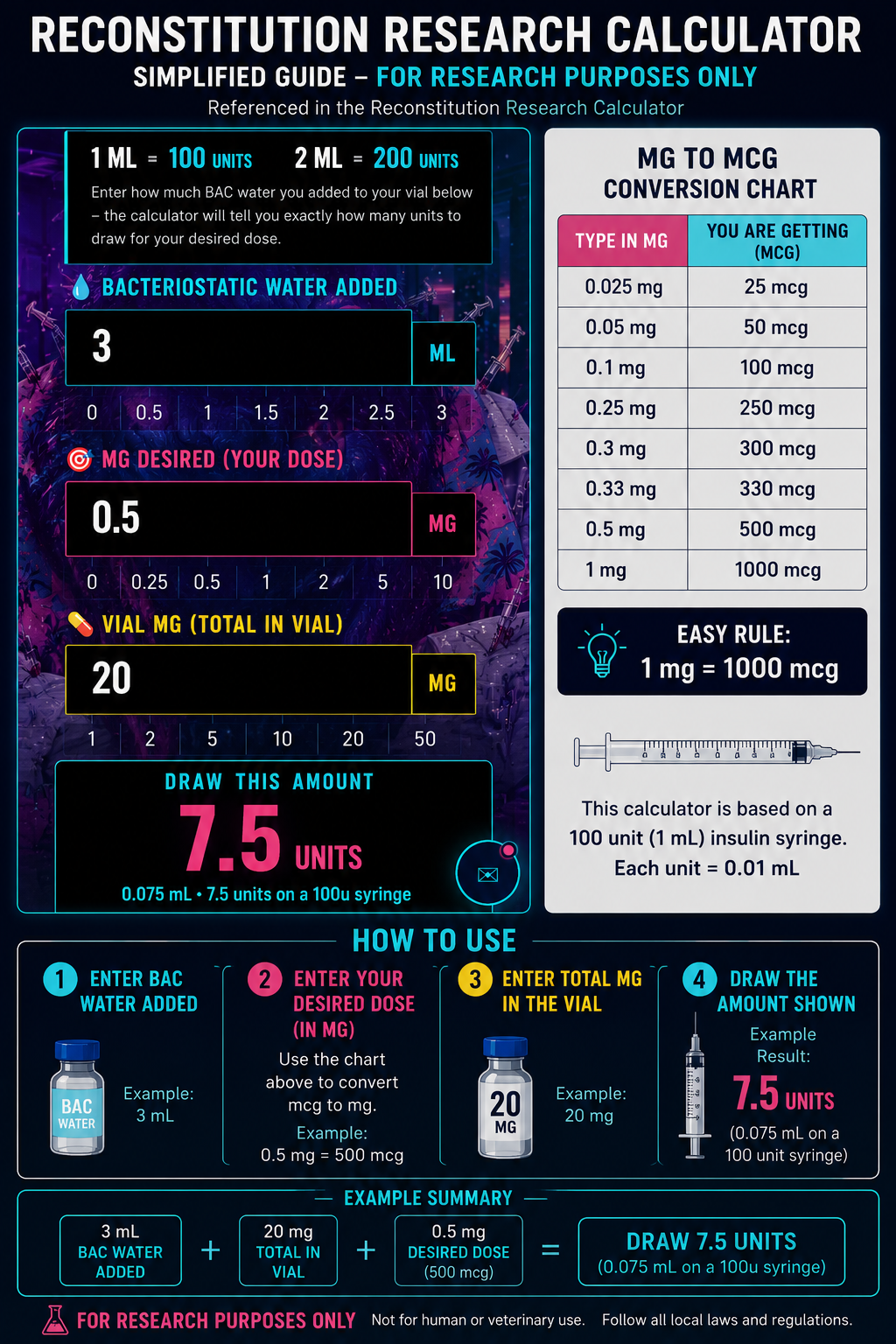
🧪 Reconstitution Info & Example (mg, mcg, units)
Easy rule: 1 mg = 1000 mcg. This calculator assumes a 100-unit (1mL) insulin syringe, where each unit = 0.01 mL.
MG to MCG quick chart: 0.025mg = 25mcg · 0.05mg = 50mcg · 0.1mg = 100mcg · 0.25mg = 250mcg · 0.3mg = 300mcg · 0.33mg = 330mcg · 0.5mg = 500mcg · 1mg = 1000mcg.
Example: You add 3 mL of BAC water to a 20mg vial, and your desired dose is 0.5mg (500mcg).
Draw amount = (desired dose ÷ total vial mg) × (mL added × 100 units/mL) = (0.5 ÷ 20) × 300 = 7.5 units (0.075 mL on a 100u syringe).
MG to MCG quick chart: 0.025mg = 25mcg · 0.05mg = 50mcg · 0.1mg = 100mcg · 0.25mg = 250mcg · 0.3mg = 300mcg · 0.33mg = 330mcg · 0.5mg = 500mcg · 1mg = 1000mcg.
Example: You add 3 mL of BAC water to a 20mg vial, and your desired dose is 0.5mg (500mcg).
Draw amount = (desired dose ÷ total vial mg) × (mL added × 100 units/mL) = (0.5 ÷ 20) × 300 = 7.5 units (0.075 mL on a 100u syringe).
📘 How To Use This Calculator (Step-by-Step)
① ENTER BAC WATER ADDED
Enter how much bacteriostatic water you added to the vial. Example: 3 mL.
Enter how much bacteriostatic water you added to the vial. Example: 3 mL.
② ENTER YOUR DESIRED DOSE (IN MG)
Use the MG ↔ MCG chart above to convert mcg to mg if needed. Example: 0.5 mg (= 500 mcg).
Use the MG ↔ MCG chart above to convert mcg to mg if needed. Example: 0.5 mg (= 500 mcg).
③ ENTER TOTAL MG IN THE VIAL
This is the total amount of peptide in the vial, printed on the label. Example: 20 mg.
This is the total amount of peptide in the vial, printed on the label. Example: 20 mg.
④ DRAW THE AMOUNT SHOWN
The calculator instantly shows how many units to draw on a 100-unit (1mL) insulin syringe. Example result: 7.5 units (0.075 mL).
The calculator instantly shows how many units to draw on a 100-unit (1mL) insulin syringe. Example result: 7.5 units (0.075 mL).
Example Summary: 3 mL BAC water + 20 mg total in vial + 0.5 mg desired dose (500 mcg) = DRAW 7.5 UNITS (0.075 mL on a 100u syringe).
🧪 For research purposes only. Not for human or veterinary use. Follow all local laws and regulations.
ℹ️ What does "Lock Ratio" mean? (example)
When Lock Ratio is ON, the vial (mg) and water (mL) fields stay tied together at a fixed mg-per-mL ratio.
Example: if the ratio is 5 mg per mL (10mg vial / 2mL water), typing 20 in the vial field auto-fills 4 in the water field, and typing 1 in the water field auto-fills 5 in the vial field.
Turn it OFF to set a custom ratio — type your own mg-per-mL value in the box that appears, then turn the lock back ON to use that custom ratio going forward.
Turn it OFF to set a custom ratio — type your own mg-per-mL value in the box that appears, then turn the lock back ON to use that custom ratio going forward.
✨ GHK-Cu — What It's For & How to Use It
GHK-Cu (Copper Peptide) is a copper-binding peptide studied for skin repair (collagen/elastin production), wound healing, hair growth, anti-inflammatory effects, and tissue remodeling. It's commonly suggested for Skin & Hair, Joints, Recovery, Anti-Aging, and Inflammation goals above.
Typical use: Dosed once daily, commonly around 1-2mg/day, for 8-12 week cycles. Some research users apply it topically as well as via injection.
Note: Copper peptides can oxidize/discolor in solution over time — store reconstituted vials in the fridge and watch for color changes (a slight blue/green tint is normal, but a strong shift may mean it's degrading).
Typical use: Dosed once daily, commonly around 1-2mg/day, for 8-12 week cycles. Some research users apply it topically as well as via injection.
Note: Copper peptides can oxidize/discolor in solution over time — store reconstituted vials in the fridge and watch for color changes (a slight blue/green tint is normal, but a strong shift may mean it's degrading).
YOUR DOSE SCHEDULE
CLEAR ALL ✕